CHEMISTRY & MEDICINE/TWB-BP-0004
The Lizard That Didn't Give Us Ozempic
A desert reptile's venom carried a molecule that lasts for hours instead of minutes - and the real story is better than the myth
Independently checked - curatorial review pending
When a good idea keeps dying on stability, copy the durability - not the whole molecule. Evolution already had to stabilise that function under worse conditions.
The problem
A lizard that eats only a handful of times a year helped give us a modern diabetes drug - but not the one you're probably thinking of. The Gila monster's venom carries a molecule that solved a problem our own bodies can't: a hunger-and-sugar hormone that doesn't fall apart in minutes. That single property - durability - turned a desert reptile's bite into a billion-dollar class of medicine. And the story everyone tells about it is half wrong.
The organism
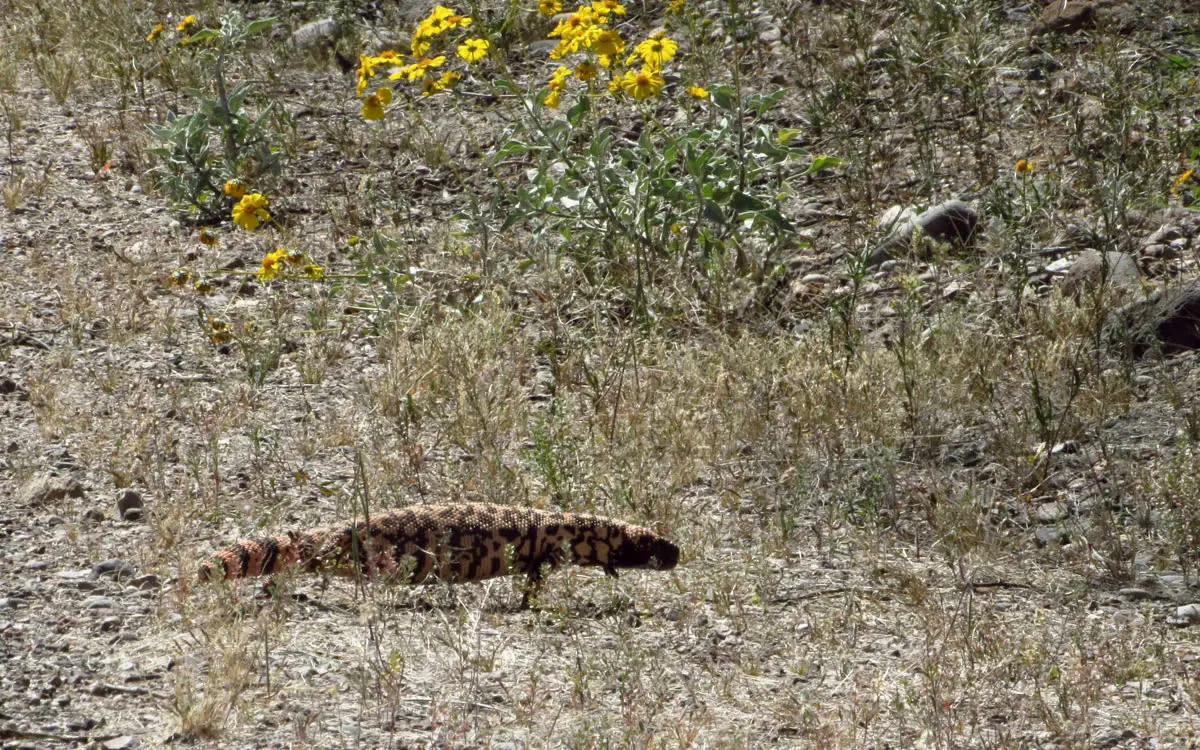
The Gila monster (Heloderma suspectum) is a slow, heavy-bodied venomous lizard of the southwestern US and northwestern Mexico. Unlike a snake that hunts often, it lives at a different metabolic tempo: it eats very large meals infrequently, storing fat and going long stretches between feedings. That lifestyle puts unusual demands on how it switches its digestion and blood-sugar machinery on and off. Its venom - delivered by a chewing bite, not a strike - is a cocktail of peptides, and one of them turned out to matter far beyond the lizard.
The mechanism
Human bodies make GLP-1 (glucagon-like peptide-1), an incretin hormone released by the gut after eating. It does several useful things at once: it triggers glucose-dependent insulin release (insulin only when blood sugar is actually high), suppresses glucagon, slows stomach emptying, and signals fullness. It is, in effect, the body's post-meal metabolic conductor.
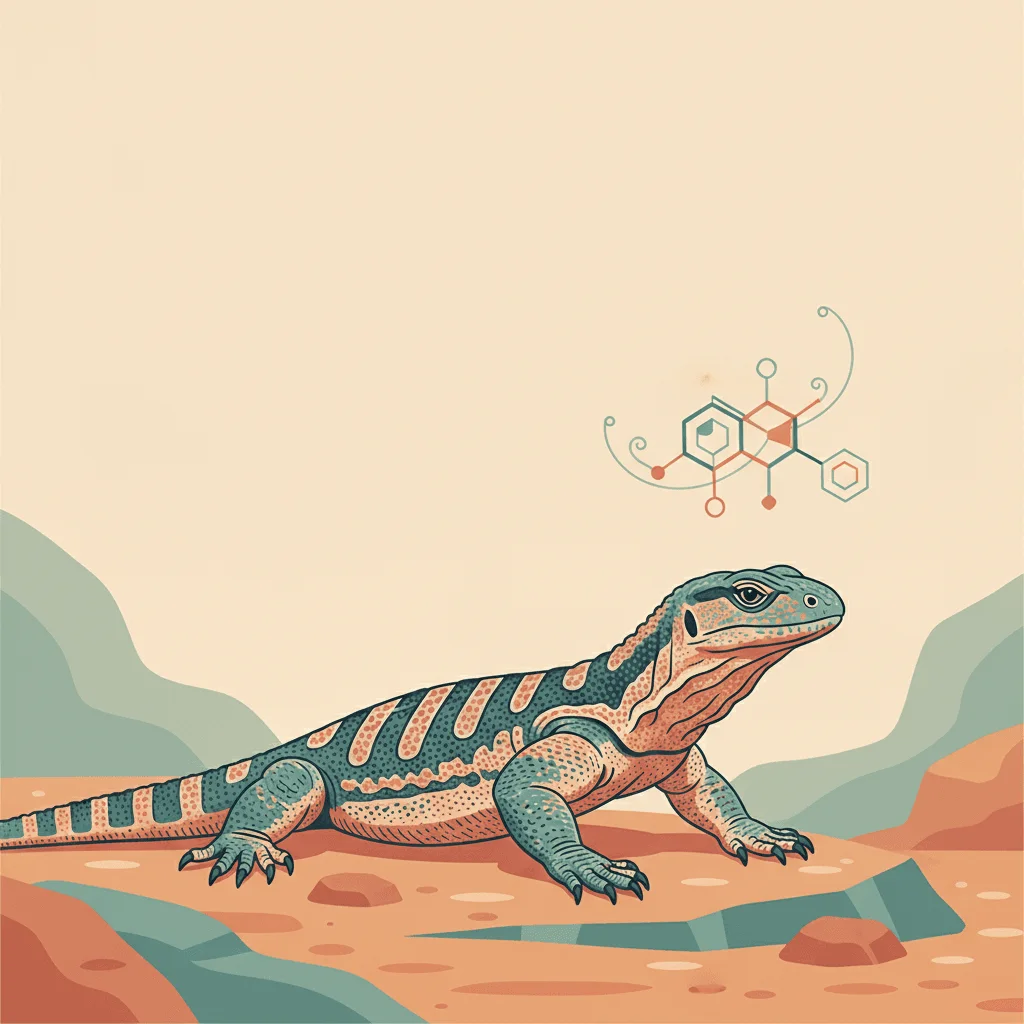
There is one problem: human GLP-1 is destroyed almost immediately. An enzyme (DPP-4) chews it up within a minute or two, so it is useless as a drug in its natural form. The Gila monster's venom contains exendin-4, a peptide only about half-identical to human GLP-1 in sequence yet which activates the same receptor - and resists DPP-4. It evolved to work in a punishing environment, so it is built to last. That durability is the whole point: the lizard's version does what our hormone does, but for hours instead of minutes.
The principle
A molecule that evolved to survive a hostile environment becomes valuable precisely because it resists the breakdown that cripples the human-made version. The innovation wasn't a new function - it was the same function made durable. When your design keeps failing on stability, look for where nature already had to solve stability under worse conditions.
The application
In 1992, endocrinologist John Eng identified exendin-4 in Gila monster venom. A synthetic copy, exenatide, was approved by the FDA in 2005 (brand Byetta; later a weekly form, Bydureon) as a GLP-1 receptor agonist for type 2 diabetes. It was one of the first drugs to turn the incretin idea into a working therapy.
Now the correction - this is the honest core of the Blueprint. The famous line "the Gila monster gave us Ozempic" is wrong. Today's blockbuster GLP-1 drugs - semaglutide (Ozempic/Wegovy) and liraglutide - are engineered from human GLP-1, made long-acting by different chemistry: a fatty-acid chain that binds the drug to blood albumin so it circulates for days, plus amino-acid substitutions that resist DPP-4. They are not derived from the lizard. What the Gila monster genuinely delivered was exenatide and, more importantly, the proof of concept: that a durable GLP-1-like peptide could safely control blood sugar in people. It opened the door; it did not build the whole house. Telling it straight is more impressive than the myth - and it's the difference between this and a clickbait channel.
The takeaway
When a good idea keeps dying on stability, don't reinvent the function - find where evolution already made that function survive worse conditions, and copy the durability, not the whole molecule.
Sources
- Wikipedia - "Exendin-4" (discovery in Gila monster venom by John Eng, 1992; resistance to DPP-4). https://en.wikipedia.org/wiki/Exendin-4
- Wikipedia - "Exenatide" (Byetta; FDA approval 2005; GLP-1 receptor agonist). https://en.wikipedia.org/wiki/Exenatide
- Wikipedia - "Glucagon-like peptide-1" (incretin physiology; glucose-dependent insulin secretion; DPP-4 degradation). https://en.wikipedia.org/wiki/Glucagon-like_peptide-1
- Wikipedia - "Gila monster" (biology, infrequent feeding, venom delivery). https://en.wikipedia.org/wiki/Gila_monster
Conservation note: the Gila monster (Heloderma suspectum) is listed Near Threatened on the IUCN Red List - pressured by habitat loss, illegal collection and killing. A reminder that the library we are reading from is quietly closing. Every extinction is a deleted patent.