STRUCTURE/TWB-BP-0009
The Silk We Still Can't Spin
Spider silk is tougher than steel for its weight, we've known how to make the protein for years - and a string of well-funded companies still failed to turn it into thread. The lesson is about which half you copy.
Human-curated
Copying an organism's material is the easy half; copying the process that assembles it is the hard half - and that is usually where both the difficulty and the value hide.
The problem
For decades, spider silk has been the poster child of "nature beats our best materials." The headline is real: weight for weight, spider dragline silk is tougher than steel - it absorbs far more energy before it breaks. So the obvious move looked easy: figure out the protein, brew it in a vat, and get rich selling a wonder fibre.
Companies raised hundreds of millions of dollars to do exactly that. Most of them failed at it. The protein was never really the problem. This Blueprint is about the part of the design everyone underestimated - and the honest, expensive lesson about which half of a natural marvel you are actually trying to steal.
The organism
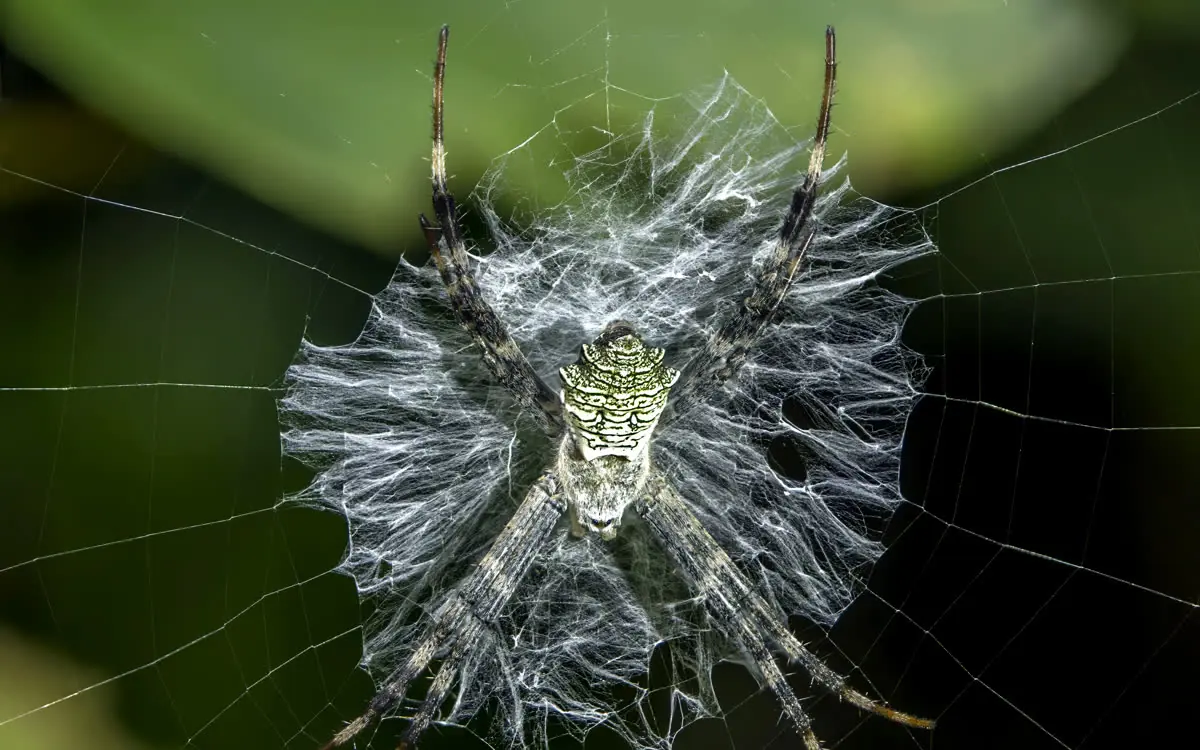
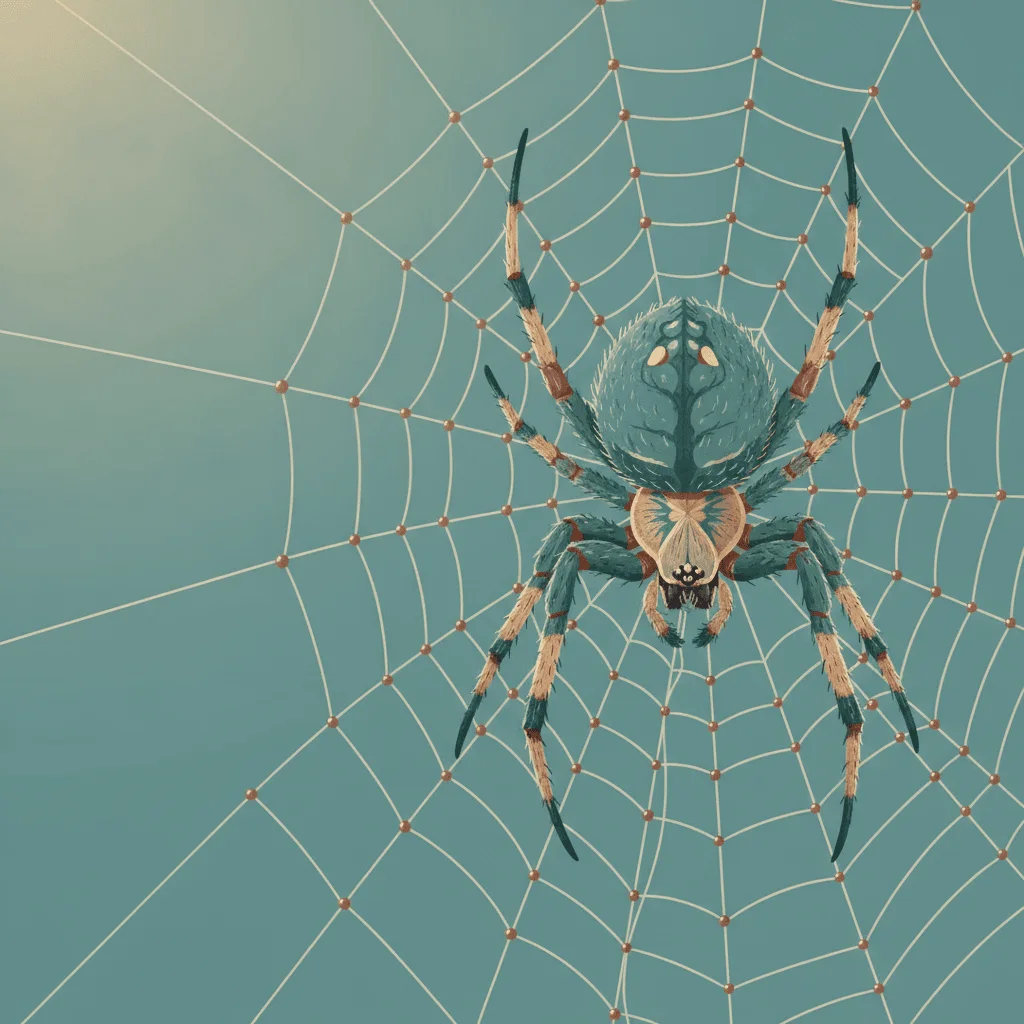
Orb-weaving spiders and their dragline silk.
A spider spins several kinds of silk, but the one that gets the headlines is dragline - the lifeline it hangs from and the frame of its web. Its trick is not raw strength (the force it takes to snap it); it is toughness: the total energy it can soak up before failing, which combines decent strength with a lot of stretch. By that measure dragline silk is remarkable - a toughness of roughly 160 MJ/m³, against Kevlar's ~50 and far more than high-tensile steel, and because silk is so light it wins even more decisively per unit mass (Gosline et al., 1999). A thread that stops a flying insect the way a climbing rope catches a fall.
But look at how the spider makes it, because that is the real design. The silk starts as a liquid protein "dope" stored in a gland. As the spider draws it out through a narrowing duct, the protein is exposed to a precise, changing gradient - of acidity, of salts, of water being pulled out, of mechanical shear - that makes the molecules line up and lock together into the final fibre. The spider is not just secreting a material; it is running a tiny, exquisitely tuned spinning process at room temperature and pressure. The molecules and the machine that assembles them are one design.
The mechanism
Here is the part that broke a decade of startups.
Making the protein turned out to be the tractable half. By putting spider-silk genes into yeast, bacteria or other hosts, labs learned to brew silk proteins in fermentation tanks. That is genuinely hard biotechnology - and it was largely solved.
Then came the wall: turning that protein soup into a fibre that actually has the properties. The spider's spinning duct does something we still struggle to reproduce - pulling the proteins into alignment under exactly the right gradient of chemistry and shear so they fold and interlock the way dragline silk does. Get the process even slightly wrong and you get a weak thread, or a clogged mess, or a fibre that is nothing like the real thing. Two barriers proved brutal: forming the protein into a fibre with the desired mechanical properties, and doing it at a cost and scale that a business can survive. The value of spider silk was never only in the molecule. It was in the manufacturing process the spider evolved, and that process is much harder to copy than the recipe for the ingredient.
The principle
Copying an organism's material is the easy half; copying the process that assembles it is the hard half - and that is usually where both the difficulty and the value hide.
The seductive error is to see a wonderful natural substance and assume the substance is the invention. Often it isn't. The invention is the process - the conditions, the gradients, the sequence, the room-temperature manufacturing line the organism runs - that turns ordinary ingredients into an extraordinary result. Spider silk proteins are, chemically, not that exotic; the spinning is the genius. When you set out to borrow a biological marvel, the first honest question is: am I copying the thing, or the way the thing is made? Because if the genius is in the making, brewing the ingredient gets you a tank of expensive goo and a long way still to go.
The application
Synthetic spider silk - the honest scoreboard.
This is a Blueprint about a bridge that has mostly not been crossed yet, told straight.
- Bolt Threads (founded 2009) brewed silk protein in yeast and made real, headline-grabbing prototypes - a Microsilk tie with Patagonia (2017), a Stella McCartney dress. But Microsilk never reached mass, affordable production as a textile fibre; the company shifted its energy to a mushroom "leather" (Mylo) and then halted that too in 2023. A cautionary tale in how far "we made the protein" is from "we have a shippable product."
- The teams making real progress mostly refused to out-spin the spider directly. Kraig Biocraft engineered silkworms - an animal that already has a superb, industrial-scale spinning apparatus - to produce spider-silk-like proteins, borrowing nature's existing process instead of rebuilding it. Japan's Spiber opened a fermented-protein plant in Thailand (2022) - though, tellingly, its commercial "Brewed Protein" is a custom-engineered protein for apparel, not spider silk itself: even a front-runner routed around the spider rather than reproduce it. Israel's Seevix and others pursue the spider-silk fibre at various stages.
The honest status: spider silk is still not a mass-market material you can buy by the tonne like nylon. After decades and a lot of money, it is a hard, slowly-yielding process problem - and the winners are the ones who respected that the process, not the protein, was the mountain. That is the useful truth, and it is more instructive than "nature made a super-material and we copied it," because we mostly haven't.
The takeaway
When a natural material dazzles you, ask whether the marvel is the stuff or the making of the stuff. Spider silk taught a generation of engineers, expensively, that you can brew the ingredient and still be nowhere - because the spider's real invention is a room-temperature spinning line we cannot yet match. Copy processes, not just materials. And when the process is the hard part, the smart move is often the spider's own: don't rebuild the factory from scratch - borrow one that already works.
Sources
- Gosline, J. M., Guerette, P. A., Ortlepp, C. S. & Savage, K. N., "The mechanical design of spider silks: from fibroin sequence to mechanical function," Journal of Experimental Biology 202(23):3295-3303, 1999 - peer-reviewed basis for dragline silk's toughness (~160 MJ/m³, exceeding Kevlar ~50 MJ/m³ and high-tensile steel on a per-mass basis). https://journals.biologists.com/jeb/article/202/23/3295/
- Kraig Biocraft Laboratories - "Spider Silk" (the two production barriers: forming the fibre with the right mechanical properties, and doing it cost-effectively at scale; engineering silkworms to spin spider-silk proteins). https://www.kraiglabs.com/spider-silk/
- C&EN / Science (AAAS) - coverage of Bolt Threads: yeast-fermented Microsilk, Patagonia tie (2017), the scale-up and funding challenges. https://cen.acs.org/articles/93/i43/Bolt-Threads.html
- Reporting on Bolt Threads halting Mylo production (CEO Dan Widmaier: "very close" to commercial scale, insufficient funding). https://www.vogue.com/article/stella-mccartney-backed-leather-alternative-mylo-halts-production-bolt-threads-kering-ganni-adidas-lululemon
- Industry overview - Spiber (Thailand plant, 2022), Seevix, and others at varying stages of mass production. https://www.genengnews.com/topics/genome-editing/weaving-textiles-from-recombinant-spider-silk/
Conservation note: most orb-weaving spiders are common, and the point of this Blueprint is a lesson in humility, not a threatened species. But the broader library it belongs to is closing - every extinction is a deleted patent, and some of those deleted patents are manufacturing processes we have not yet learned to read.